info@hhxmjs.com
China Precision Manufacturing
ISO 9001 | IATF 16949
24H Response

华航新马
HUAHANG XINMA

CNC MACHINING MATERIAls
Stainless Steel CNC Machining
Custom Stainless Steel Parts for OEM Applications
Stainless steel combines corrosion resistance, strength and durability, making it suitable for a wide range of precision components. Huahang xinma manufactures custom CNC-machined stainless steel parts according to customer drawings, material specifications and project requirements.
Corrosion Resistance
Grade options for different environments
Mechanical Strength
Suitable for demanding component requirements
CNC Machining
Turning, milling and precision features
Why Choose Stainless Steel?
A Reliable Material for Precision Components
Stainless steel offers a combination of corrosion resistance, strength and durability for components used in demanding operating environments.
Corrosion Resistance
Different grades provide varying levels of resistance to moisture, chemicals and corrosive environments.
Mechanical Strength
Suitable for components requiring strength, durability and structural reliability.
Wear and Durability
Selected grades and heat-treatment conditions can support specific wear and hardness requirements.
Surface Finishes
APassivation, polishing and other finishing options can be considered according to application requirements.
Common Stainless Steel Grades
The grades below are common examples, not an exhaustive list of available materials.
| Grade | Key Characteristics | Typical Applications |
|---|---|---|
| 303 | Improved machinability; lower corrosion resistance than 304 in many environments | Shafts, fittings, fasteners |
| 304 | General-purpose corrosion resistance and good formability | Housings, brackets, equipment parts |
| 304L | Low-carbon grade, commonly selected for welded applications | Welded assemblies, equipment components |
| 316 | Molybdenum-containing grade with improved resistance to certain corrosive environments | Marine, chemical and fluid-system components |
| 316L | Low-carbon version of 316, commonly used where corrosion resistance and welding requirements matter | Instrumentation, fluid-system and selected medical equipment parts |
| 17-4 PH | Precipitation-hardening stainless steel with high strength after heat treatment | Shafts, structural and mechanical components |
* Need a Different Stainless Steel Grade?
Understanding the Differences
303 — Machinability
Suitable for turned parts and precision components where machining efficiency is important. Its corrosion resistance is generally lower than 304.
304 — General Purpose
A versatile choice for general industrial components, equipment housings and brackets.
316 / 316L — Corrosion Resistance
Molybdenum improves resistance to certain chloride-containing and corrosive environments compared with 304. Actual suitability depends on service conditions.
17-4 PH — High Strength
Suitable for components requiring higher strength. The specified heat-treatment condition is an important part of material selection.
Material Selection Considerations
Corrosion Environment
Consider exposure to moisture, salt, chemicals and cleaning agents.
Mechanical Requirements
Evaluate strength, hardness, wear resistance and load conditions.
Machining Requirements
Consider part geometry, tolerances, threads and machining complexity.
Material Condition
Confirm the required grade, material standard and heat-treatment condition where applicable.
* Not sure which grade to specify? Share your drawing and application requirements for a material review.
Precision CNC Machining Capabilities
Huahang manufactures custom stainless steel components using CNC turning, milling and multi-axis machining. Machining methods and inspection requirements are evaluated according to material grade, part geometry, drawing tolerances and production quantity.

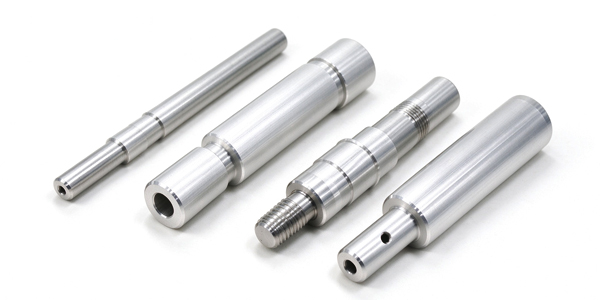
CNC Turning
For shafts, pins, bushings, fittings and threaded components.
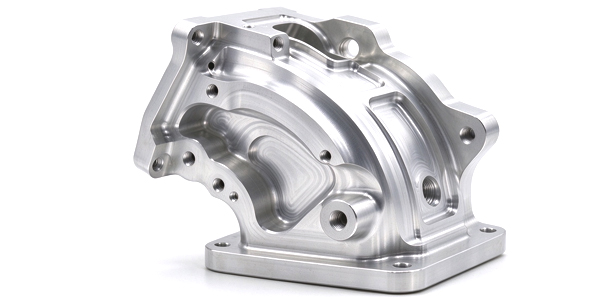
CNC Milling
For housings, brackets, plates, slots and complex machined features.
Multi-Axis Machining
For suitable components requiring machining from multiple orientations.
Manufacturing Requirements We Review
Stainless steel grade and material condition
Part geometry and machining feasibility
Dimensional tolerances and critical features
Thread, hole and surface requirements
Inspection criteria and production quantity
* Stainless steel machining requires appropriate tooling, cutting parameters and process control. Achievable tolerances and surface quality depend on the material, geometry and manufacturing conditions.
Aluminum Surface Finishes
Surface finishing can influence appearance, corrosion protection, wear performance and dimensional requirements. The appropriate process depends on the selected alloy, component geometry, functional requirements and applicable specifications.

Anodizing
For specified appearance and surface-protection requirements. Alloy and process affect the final result.

Bead Blasting
For a more uniform matte appearance on suitable components.

Brushed Finish
For parts requiring a directional surface texture or specified visual appearance.

Other Finishes
Additional finishing requirements can be reviewed according to the drawing and project specification.
* For parts with tight dimensional requirements, specify which surfaces require finishing and identify critical dimensions that must be maintained after treatment.
Material Quality & Traceability
Material selection is only one part of component quality. The required grade, temper, documentation and inspection criteria should be defined before production to support consistent manufacturing and clear acceptance requirements.
Material Grade Verification
Review the specified aluminum grade, temper and applicable material standard.
Material Documentation
Material certificates can be reviewed or provided where required and agreed for the project.
Incoming Material Inspection
Inspection requirements are established according to the applicable quality procedures and order specifications.
Batch Traceability
Traceability requirements can be defined according to customer, industry and order-specific needs.
* Inspection records, material documentation and other quality deliverables should be confirmed according to the agreed project requirements.
Typical Applications
Robotics & Motion Systems
Mounting brackets, structural parts, lightweight housings.
Industrial Automation
Fixtures, equipment supports and machine components.
Electronics & Smart Devices
Enclosures, covers, frames and heat sinks.
Precision Equipment
Custom housings, support structures, precision parts.
* Aluminum CNC-machined parts are used in a wide range of equipment and assemblies. The most suitable grade and manufacturing approach depend on the operating environment and functional requirements of each application.
Have an Aluminum Component to Manufacture?
Send us your drawings and material requirements.
Our team can review material specifications, machining feasibility,
dimensional requirements and surface finishing needs for your project.
Engineering Review · DFM Feedback · Material Specification Review
Have any questions? You can also contact our team
directly through our Contact Us page.
 EN
 ZH