Metal Injection Molding (MIM) Services

Complex Shapes · Fine Detail · High Volume Efficiency

Huahang Xinma offers high-precision MIM manufacturing, ideal for small and complex metal components with tight tolerances and smooth finishes — tailored for industries like medical, automotive, electronics, and aerospace.


Metal Injection Molding (MIM) is a manufacturing process that combines the design flexibility of plastic injection molding with the strength and integrity of metal. It is ideal for producing small, intricate, high-strength parts with excellent repeatability—especially in high volumes.


Feedstock Preparation & Pelletizing

Metal powder + Thermoplastic binder → Uniform feedstock

We mix fine metal powders with thermoplastic binders to form a homogeneous mixture. This mixture is granulated into small pellets, typically a few millimeters in diameter, ready for injection molding.

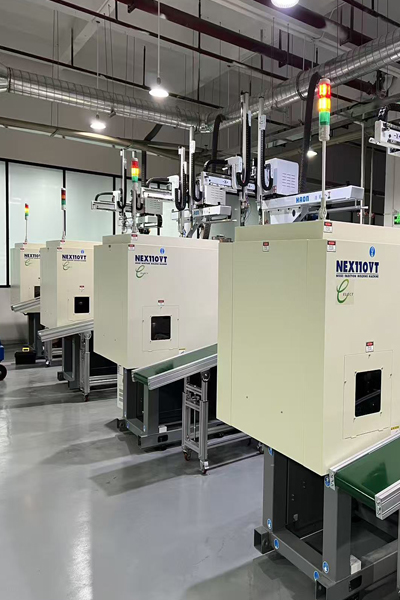
Injection Molding

Pellets → Molded green parts

The feedstock is heated and injected into precision molds using high-pressure screws. Once cooled, the molded parts—called “green parts”—are ejected from the mold.

Debinding (Binder Removal)

Green parts → Brown parts

The green parts undergo debinding to remove most of the binder. This is done using thermal or solvent-based methods, leaving behind fragile “brown parts” composed of mostly metal.

Sintering

Brown parts → Fully dense metal parts

The debound parts are placed in a high-temperature furnace where sintering densifies the metal. The final parts achieve up to 98% of the density of wrought metal, with excellent mechanical and surface properties.

Optional: Secondary Operations

Post-processing as needed

Depending on application, parts may undergo further CNC machining, polishing, heat treatment, or surface coating to meet exact specifications.

Final Inspection & Packaging

Each part is thoroughly inspected for both dimensions and appearance before being carefully packaged for delivery.


Stainless Steel (316L, 304L, 17-4PH)

Tool Steels (M2, D2)

Titanium Alloys

Soft Magnetic Alloys

Low-Alloy Steels

Custom alloys available upon request


Image of precision-machined metal parts used in automotive and electric vehicle applications, such as gearbox housings, drive shafts, and EV battery enclosures.

Precision-machined robot joints, enclosures, and structural parts for industrial and service robots.

| Consumer Electronics | SIM card trays, hinges, EMI shields |

| Automotive | Turbocharger vanes, sensor housings, locking systems |

| Defense & Aerospace | Miniature structural parts, guide sleeves |


Complex 3D Geometries

Examples: blind holes, internal threads, internal gears, cross/angled holes

Thin-Walled Structures

Recommended wall thickness: 0.5–6.0 mm with good uniformity

Fine Details Without Post-Machining

Capable of forming features like logo engraving, precision steps, snap-fits

Min Wall Thickness

≥ 0.4 mm, recommended ≥ 0.8 mm

Max Wall Thickness

≤ 10 mm, to avoid incomplete debinding/sintering

Minimum Hole Diameter

≥ 0.3 mm (can be improved with laser/secondary machining)

Maximum Size

Typically ≤ 100 mm, depends on mold design & debinding capacity

Dimensional Tolerance

±0.03 ~ ±0.05 mm (depending on geometry complexity)

Ensure proper parting lines to minimize side actions and complex sliders

Add draft angles (recommended 0.5°–2°) for easier demolding

Avoid sharp corners and edges; use fillets for smoother transitions

Leverage MIM to consolidate multiple parts into a single component

Consult Huahang’s engineering team early for DFM (Design for Manufacturability) support

Integrated shafts, sliders, and gear components

Complex connectors with embedded inserts

Miniature medical device components

High-volume 3C (computer, communication, consumer electronics) hardware parts

Free DFM analysis and optimization

Rapid prototyping in 7–14 days

Material selection and performance consulting

Post-processing consulting (heat treatment, plating, CNC)


All MIM parts undergo comprehensive quality checks including dimensional inspection, density verification, and mechanical testing. We provide PPAP documentation and material certificates as needed.

Certifications: ISO 9001:2015 / IATF 16949:2016


Ready to manufacture MIM parts that are lightweight, strong, and complex?
We help you from concept to production — including material guidance, mold development, and mass production.

en_USEN